Best AI Wearable Devices in 2026: Smart Gadgets That Actually Change Your Daily Life
Daftar Isi
- What Makes a Wearable "AI-Powered"?
- Best AI Smartwatches in 2026
- Apple Watch Ultra 3
- Samsung Galaxy Watch 7
- Garmin Venu 4
- Best Smart Rings in 2026
- Oura Ring Gen 4
- Pebble Index O1
- Switchbot AI Mindclip
- Best AI Smart Glasses in 2026
- Meta Ray-Ban AI Glasses (2026 Edition)
- Google AR Glasses
- Best AI Health Monitors (No Wearable Needed)
- Smart Health Mirrors
- Biometric Home Stations
- Best AI Earbuds with Health Features
- Apple AirPods Pro 3
- Samsung Galaxy Buds AI
- How to Choose the Right AI Wearable for You
- Price Comparison Table
- What's Coming Next: AI Wearable Predictions for Late 2026
- Conclusion
Remember when wearable tech meant strapping a pedometer to your belt and calling it a day? Those times are long gone. The best AI wearable devices in 2026 do not just count your steps or flash notifications on your wrist. They learn your behavior, predict health issues before you feel them, translate languages in real time, and even coach you through workouts with the nuance of a personal trainer.
CES 2026 made one thing crystal clear: the era of passive data collection is over. This year's showcase was dominated by AI that interprets and acts on wearable metrics, turning raw biometric data into genuinely useful, personalized guidance. From smart rings you barely notice to AR glasses that overlay directions onto the real world, the wearable landscape has shifted dramatically.
In this guide, we break down every category of AI-powered wearable worth your attention in 2026, compare prices, and help you figure out which one actually fits your life.

What Makes a Wearable "AI-Powered"?
Before diving into specific products, it helps to understand what separates a true AI wearable from a regular smart device with a few algorithms.
A standard fitness tracker collects data: heart rate, steps, sleep duration. It shows you numbers. An AI-powered wearable goes further by doing three things:
- Pattern recognition -- It learns your personal baselines over weeks and months, understanding what is normal specifically for you.
- Predictive analysis -- It flags anomalies before they become problems. For example, detecting early signs of illness based on subtle changes in heart rate variability and skin temperature.
- Adaptive response -- It adjusts its recommendations based on context. If you slept poorly, it modifies your workout suggestion. If your stress levels spike during certain meetings, it learns to prompt breathing exercises beforehand.
The key difference is agency. Traditional wearables report. AI wearables advise, adapt, and in some cases, act autonomously on your behalf.
Best AI Smartwatches in 2026
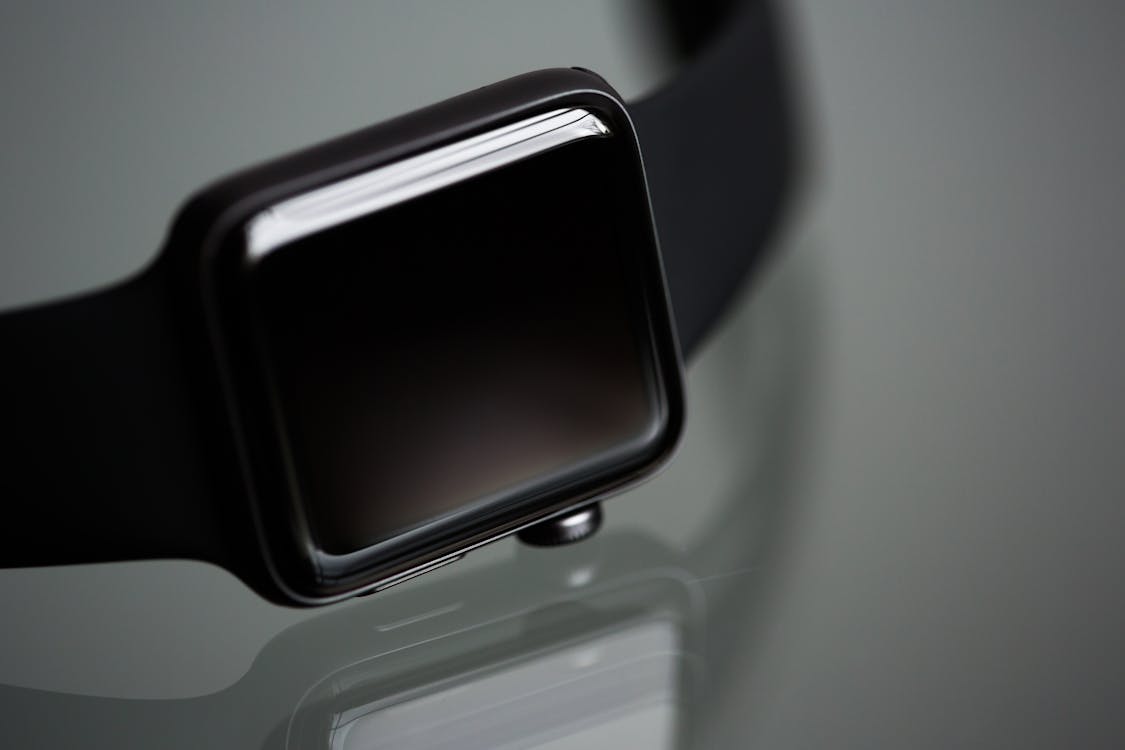
Smartwatches remain the most popular wearable form factor, and the 2026 generation represents a major leap in on-device AI processing.
Apple Watch Ultra 3
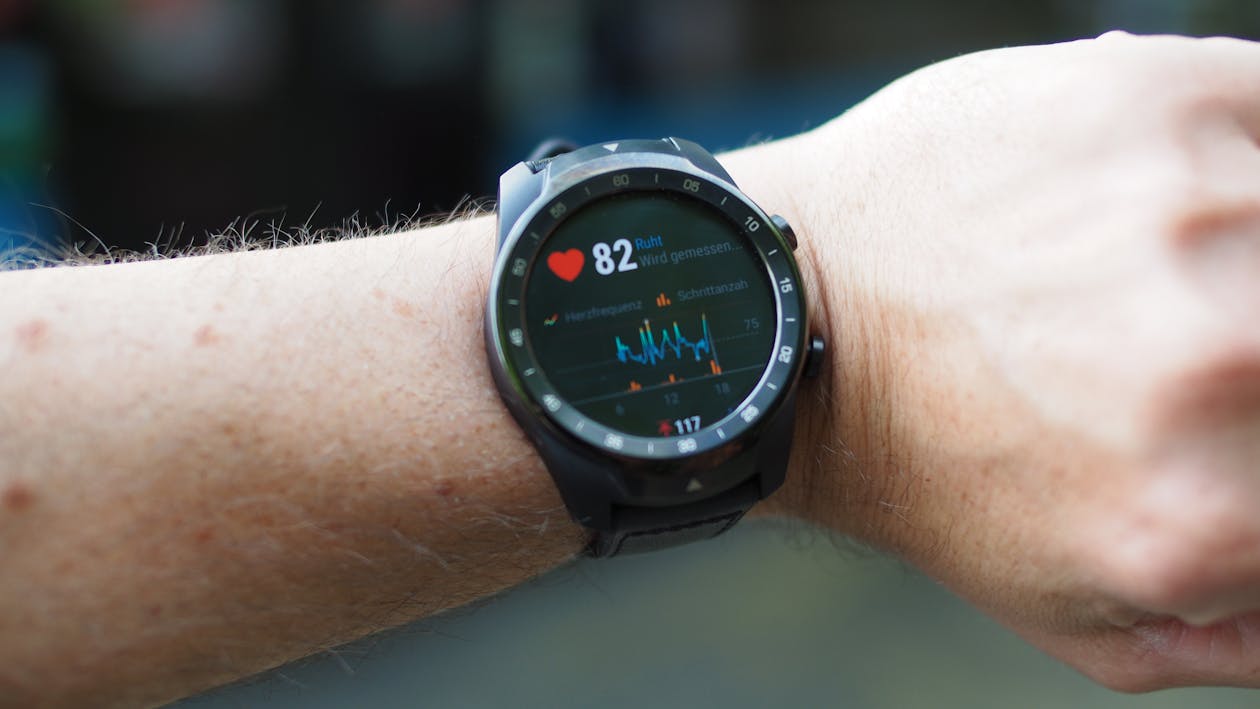
Apple's flagship wearable now runs an upgraded Neural Engine that handles health predictions entirely on-device, meaning your data never needs to leave your wrist. Key AI features include predictive cardiac monitoring that can warn of atrial fibrillation up to 72 hours before an episode, an adaptive fitness coach that builds and modifies workout plans in real time, and a sleep architecture analyzer that does more than track sleep stages -- it correlates your sleep patterns with next-day performance metrics.
Price: Starting at $799
Samsung Galaxy Watch 7
Samsung doubled down on its Galaxy AI integration this year. The Galaxy Watch 7 features a BioActive sensor array paired with an on-device LLM that can answer natural-language health questions like "Why did I feel tired yesterday?" by cross-referencing your sleep, activity, and stress data. Samsung's AI also powers real-time voice translation through connected Galaxy Buds, making it a strong travel companion.
Price: Starting at $349
Garmin Venu 4
Garmin has traditionally focused on athletes, but the Venu 4 brings AI-driven training intelligence to everyday users. Its standout feature is predictive recovery scoring that factors in not just physical exertion but also stress, hydration estimates, and environmental conditions. The AI learns your recovery patterns over time and gets noticeably more accurate after the first month of use.
Price: Starting at $449
Best Smart Rings in 2026
Smart rings are emerging as the preferred wearable for people who want continuous health tracking without the bulk of a watch. They are discreet, comfortable for 24/7 wear, and the 2026 models pack serious AI capability into a tiny form factor.
Oura Ring Gen 4
Still the category leader, the Oura Ring Gen 4 added multi-day illness prediction powered by a machine learning model trained on millions of user data points. It can detect the onset of a cold or flu up to two days before symptoms appear based on subtle shifts in temperature, HRV, and respiratory rate. The updated Oura AI assistant provides daily briefings that feel less like data dumps and more like a conversation with a health-savvy friend.
Price: $349 (plus $5.99/month membership)
Pebble Index O1
A standout from CES 2026, the Pebble Index O1 is designed specifically for cognitive wellness. Beyond standard health metrics, it monitors patterns associated with focus, mental fatigue, and stress resilience. Its AI engine provides "cognitive weather" forecasts -- essentially predicting your mental energy levels for the coming hours based on your biometric trends and schedule. It is a fascinating concept that delivers surprisingly actionable insights.
Price: $299
Switchbot AI Mindclip
Another CES 2026 highlight, the Switchbot AI Mindclip blurs the line between wearable and smart home controller. Worn as a ring, it tracks your health metrics while also serving as an AI-powered gesture controller for your smart home. Pinch to dim the lights. Rotate to adjust thermostat. The health AI component learns your routines and can automate home settings based on your biometric state -- dimming lights and lowering the temperature when it detects you are winding down for sleep.
Price: $249
Best AI Smart Glasses in 2026
Smart glasses are finally going mainstream in 2026, largely thanks to improvements in display quality, battery life, and the AI features that make wearing a computer on your face genuinely useful rather than gimmicky.
Meta Ray-Ban AI Glasses (2026 Edition)
Meta refined its Ray-Ban collaboration with a more powerful on-device AI assistant that can identify objects, read text aloud, and provide real-time language translation for over 40 languages. The killer feature this year is contextual AR navigation: subtle directional cues appear in your peripheral vision when walking, so you never need to stare at your phone for directions. The glasses look almost indistinguishable from regular Ray-Bans, which remains their biggest advantage.
Price: Starting at $399
Google AR Glasses
Google re-entered the smart glasses market with a device focused squarely on AI utility. Powered by Gemini, these glasses offer live captioning and translation, visual search (look at a restaurant and see reviews), and an AI assistant that can see what you see and answer questions about your environment. Early reviews praise the display clarity and the surprisingly natural interaction model.
Price: Starting at $499
Best AI Health Monitors (No Wearable Needed)
Not everyone wants to wear a device 24/7. The 2026 market introduced a new category: ambient health monitors that use AI to track your vitals without anything strapped to your body.
Smart Health Mirrors
Companies like Withings and NuraLogix now sell bathroom mirrors equipped with cameras and sensors that analyze your face for heart rate, blood pressure estimates, stress levels, and even early signs of skin conditions. You simply stand in front of your mirror during your morning routine, and the AI builds a daily health snapshot. No wearable required.
Price range: $500 - $1,200
Biometric Home Stations
These tabletop devices combine multiple sensors -- infrared, radar, environmental -- to monitor health metrics passively as you go about your day. They can track respiratory rate, detect falls (critical for elder care), and monitor sleep quality from across the room. The AI component learns household patterns and can alert caregivers or family members to anomalies.
Price range: $300 - $800
Best AI Earbuds with Health Features
Earbuds have quietly become serious health-tracking devices, leveraging their position in the ear canal to capture biometric data that wrist-based sensors miss.
Apple AirPods Pro 3
Apple added continuous heart rate monitoring and hearing health features powered by on-device AI. The earbuds can detect early signs of hearing loss and automatically adjust audio profiles to compensate. They also serve as a real-time language translator when paired with an iPhone.
Price: $279
Samsung Galaxy Buds AI
Samsung's latest earbuds integrate with Galaxy AI to provide posture coaching during workouts, real-time translation across 50 languages, and an ambient sound mode that uses AI to filter specific types of noise while keeping important sounds like voices and alarms clear.
Price: $229
How to Choose the Right AI Wearable for You
With so many options, picking the right device depends on what you actually need. Here is a quick framework:
- For comprehensive health tracking: A smartwatch like the Apple Watch Ultra 3 or Samsung Galaxy Watch 7 gives you the most sensors and the deepest AI health insights.
- For discreet 24/7 monitoring: A smart ring like the Oura Ring Gen 4 or Pebble Index O1 tracks your health without anyone noticing you are wearing tech.
- For productivity and travel: AI smart glasses from Meta or Google shine with translation, navigation, and hands-free information access.
- For home health without wearables: Smart mirrors and biometric stations are ideal for seniors or anyone who finds wearing devices uncomfortable.
- For fitness-focused users: Garmin's AI-driven training intelligence and earbuds with posture coaching offer the most workout-specific value.
Consider ecosystem compatibility as well. Apple devices work best together, Samsung's Galaxy AI features are strongest within the Galaxy ecosystem, and platform-agnostic options like Oura and Garmin play well with both Android and iOS.
Price Comparison Table
| Device | Category | Starting Price | AI Subscription |
|---|---|---|---|
| Apple Watch Ultra 3 | Smartwatch | $799 | None |
| Samsung Galaxy Watch 7 | Smartwatch | $349 | None |
| Garmin Venu 4 | Smartwatch | $449 | None |
| Oura Ring Gen 4 | Smart Ring | $349 | $5.99/month |
| Pebble Index O1 | Smart Ring | $299 | None |
| Switchbot AI Mindclip | Smart Ring | $249 | None |
| Meta Ray-Ban AI Glasses | Smart Glasses | $399 | None |
| Google AR Glasses | Smart Glasses | $499 | None |
| Apple AirPods Pro 3 | Earbuds | $279 | None |
| Samsung Galaxy Buds AI | Earbuds | $229 | None |
| Smart Health Mirrors | Health Monitor | $500 | Varies |
| Biometric Home Stations | Health Monitor | $300 | Varies |
What's Coming Next: AI Wearable Predictions for Late 2026
The second half of 2026 promises even more interesting developments:
Samsung Galaxy Z TriFold. Samsung's tri-fold form factor is expected to arrive later this year, and it could redefine the relationship between wearables and phones. A device that unfolds from phone to tablet size with wearable-grade sensors built into the frame would blur the lines between categories entirely.
Home robots with real dexterity. CES 2026 showcased prototypes of home robots that can fold laundry, handle kitchen tasks, and assist with elder care. As these reach consumers in late 2026 and early 2027, expect them to integrate deeply with wearable health data -- your robot assistant knowing from your smart ring that you are feeling unwell and adjusting its care routine accordingly.
Predictive health ecosystems. The biggest trend to watch is not any single device but the convergence of multiple AI wearables into unified health platforms. Imagine your smart ring, watch, glasses, and home sensors all feeding data into a single AI that builds a truly comprehensive picture of your health and adapts your entire environment to support it.
On-device AI getting smarter. Privacy concerns are pushing more AI processing onto the devices themselves rather than the cloud. Expect late-2026 wearables to handle increasingly sophisticated analysis without ever sending your health data to a remote server.
Conclusion
The best AI wearable devices in 2026 represent a fundamental shift from passive tracking to active, intelligent assistance. Whether you choose a smartwatch that predicts health issues, a smart ring that quietly monitors your cognitive energy, or AR glasses that overlay useful information onto your world, the common thread is AI that learns you as an individual and gets more useful over time.
The days of wearables that simply count steps and display notifications are effectively over. The question is no longer whether AI wearables are worth buying -- it is which combination of devices fits your lifestyle and goals. Start with your biggest need, pick the device that addresses it best, and let the AI do what it does best: learn, adapt, and make your daily life measurably better.
Butuh Solusi Digital untuk Bisnis Anda?
Tim Wardigi siap membantu mewujudkan ide Anda menjadi aplikasi yang powerful. Konsultasi gratis!
💬 Chat WhatsApp Sekarang